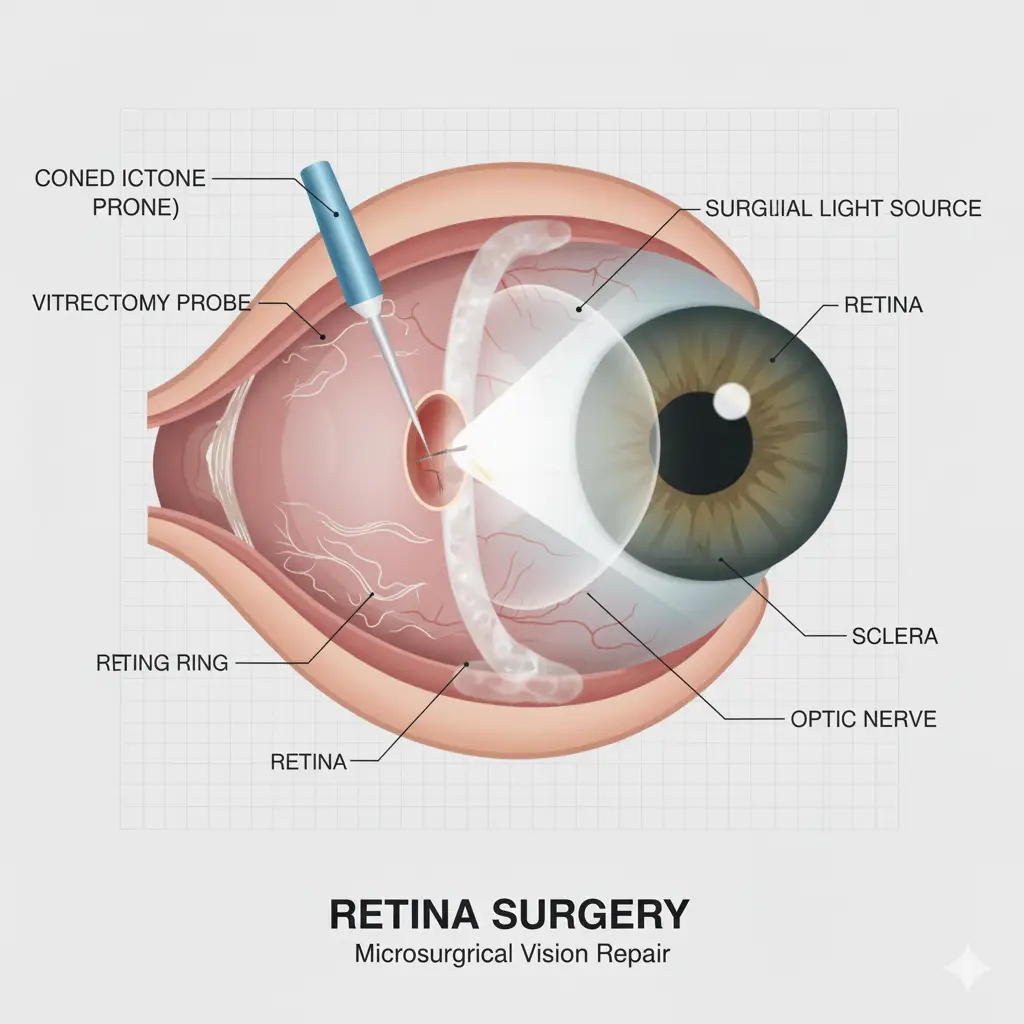
What Is the Retina?
The retina acts like the film of a camera or the sensor of a digital device. When light enters the eye, the retina processes it and sends visual information to the brain through the optic nerve.
A healthy retina is essential for:
- Clear vision
- Color perception
- Night vision
- Sharp central vision
- Detecting movement
Layers of the Retina
The retina is made up of multiple layers, including:
- Photoreceptor Layer: Contains rods (for night vision) and cones (for color and detail).
- Macula: The central part responsible for sharp, detailed vision.
- Fovea: A tiny pit within the macula providing the clearest vision.
- Retinal Nerve Fiber Layer: Carries signals to the optic nerve.
Damage to any of these layers can affect vision.
Functions of the Retina
1. Captures Light
The retina absorbs incoming light and converts it into electrical signals.
2. Processes Visual Information
Special cells interpret shapes, colors, and movements.
3. Sends Signals to the Brain
The optic nerve transmits processed information to the visual cortex, where images are formed.
Common Retinal Diseases
1. Diabetic Retinopathy
Caused by diabetes damaging blood vessels in the retina.
Symptoms include blurred vision, floaters, and vision loss.
Early screening is crucial.
2. Retinal Detachment
A medical emergency where the retina lifts away from its normal position.
Symptoms:
- Sudden flashes of light
- Floaters
- Shadow or curtain over vision
Immediate treatment is necessary.
3. Age-Related Macular Degeneration (AMD)
Affects the macula and leads to central vision loss.
Common in people above 50.
4. Macular Hole
A small break in the macula causing blurred and distorted central vision.
5. Retinal Vein Occlusion
Blocked blood vessels lead to swelling and vision loss.
6. Retinitis Pigmentosa
A genetic disorder causing gradual peripheral vision loss and night blindness.
7. Epiretinal Membrane
A thin layer of scar tissue on the retina that can cause distortion.
Symptoms of Retinal Problems
Seek medical attention if you notice:
- Blurred or distorted vision
- Sudden flashes or floaters
- Dark spots or blind areas
- Straight lines appearing wavy
- Difficulty with night vision
- A shadow or curtain-like effect
Retinal diseases often progress silently, so early detection is vital.
How Retinal Diseases Are Diagnosed
Eye specialists use advanced techniques such as:
- OCT Scan (Optical Coherence Tomography) – high-resolution imaging of the retina
- Fundus Photography – captures detailed retinal images
- Fluorescein Angiography – checks blood flow
- Ultrasound B-Scan – used if the view is cloudy
- Visual Field Testing
These tests help identify issues even before symptoms appear.
Retina Treatment Options
1. Anti-VEGF Injections
Used for diabetic retinopathy, AMD, and some retinal swellings.
They reduce leakage and improve vision.
2. Laser Photocoagulation
Seals leaking blood vessels and prevents disease progression.
3. Vitrectomy Surgery
A surgical procedure to remove vitreous gel for retinal detachment, macular hole, or severe bleeding.
4. Cryotherapy
Freezing treatment to repair retinal tears.
5. Medications & Eye Drops
Used for inflammation and infections affecting the retina.
How to Keep Your Retina Healthy
- Maintain healthy blood sugar levels
- Control blood pressure and cholesterol
- Avoid smoking
- Wear sunglasses to protect from UV rays
- Eat foods rich in omega-3, lutein, and vitamins
- Get regular eye check-ups, especially after age 40
Conclusion
The retina is a delicate and vital structure that allows us to see clearly. Retinal diseases can be serious but are often treatable when diagnosed early. Regular eye examinations, timely treatment, and proper health management can help protect your vision for life.
Need Expert Medical Advice?
Our team of experienced doctors is here to help you with any health concerns.
Book Appointment