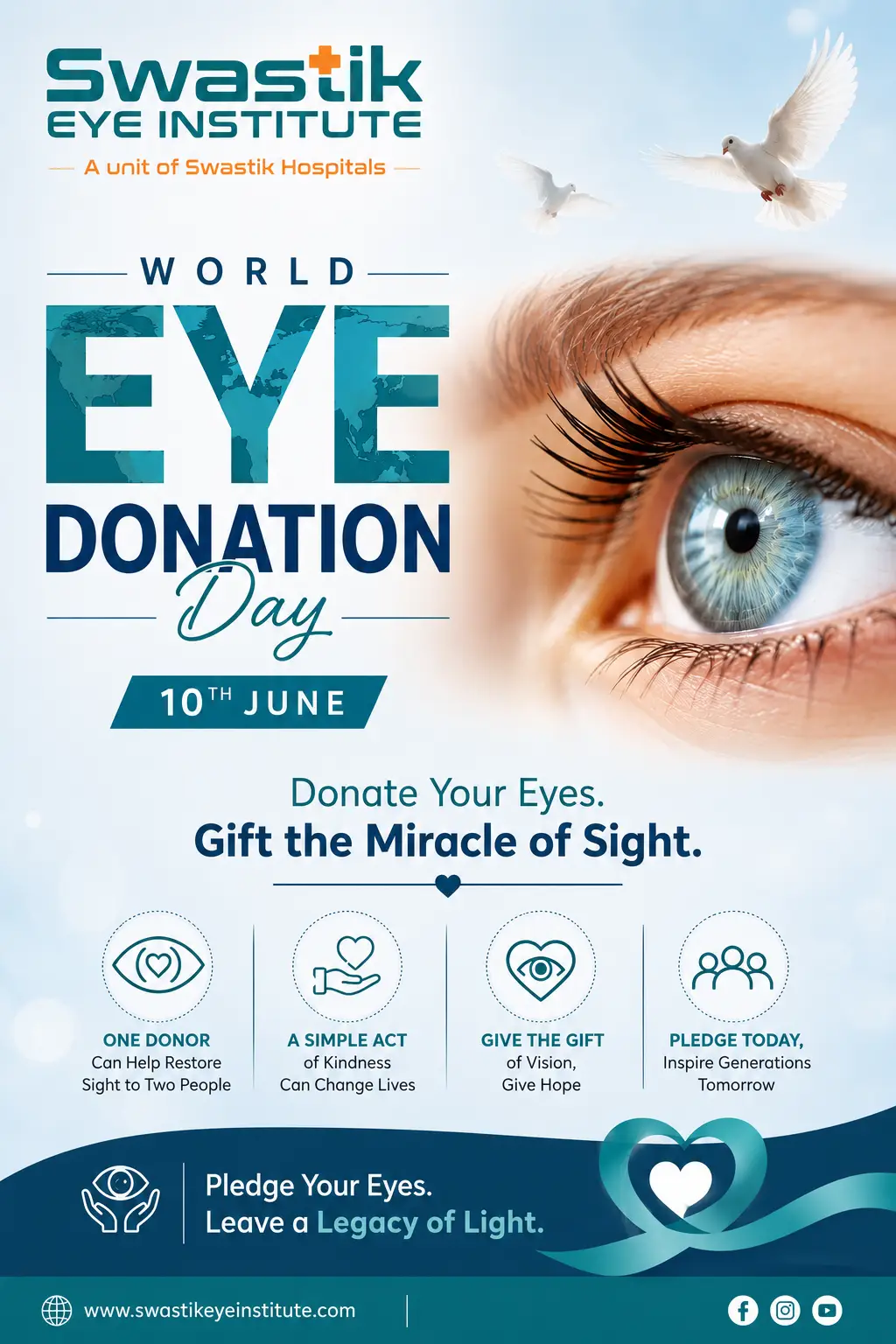
World Eye Donation Day: Give the Gift of Sight Through Eye Donation
Every year, World Eye Donation Day is observed to raise awareness about the importance of eye donation and encourage people to pledge their eyes after death. Millions of people worldwide suffer from corneal blindness, and eye donation can help restore vision and transform lives.
Eye donation is one of the most noble acts of humanity. By donating your eyes, you can help someone see the world again and improve their quality of life.
What is Eye Donation?
Eye donation refers to the donation of the cornea—the transparent front part of the eye—after a person's death. The donated cornea can be transplanted into individuals suffering from corneal blindness, helping them regain vision.
Contrary to common myths, eye donation does not cause facial disfigurement and does not delay funeral arrangements.
Why is Eye Donation Important?
Millions of people are affected by vision loss due to corneal diseases, injuries, infections, and congenital disorders. Eye donation plays a vital role in:
- Restoring vision to individuals with corneal blindness
- Improving quality of life and independence
- Reducing the burden of preventable blindness
- Supporting medical education and research
- Giving hope to patients waiting for corneal transplantation
Who Can Donate Eyes?
Most people can donate their eyes regardless of:
- Age
- Gender
- Blood group
- Use of spectacles or contact lenses
- Previous cataract surgery
Medical professionals evaluate donated corneas to determine their suitability for transplantation.
How Does Eye Donation Work?
1. Pledge Your Eyes
Register your willingness to donate your eyes and inform your family about your decision.
2. Inform Family Members
Family consent is often required after death. Make sure your loved ones are aware of your wish.
3. Contact an Eye Bank
After death, family members should immediately contact the nearest eye bank.
4. Cornea Retrieval
Eye retrieval is usually performed within 4–6 hours after death by trained professionals.
5. Corneal Transplantation
The donated cornea is carefully evaluated and transplanted into a recipient in need.
Common Myths About Eye Donation
Myth: Elderly people cannot donate eyes.
Fact: People of almost any age may be eligible for eye donation.
Myth: Eye donation disfigures the face.
Fact: The procedure is performed respectfully and does not affect facial appearance.
Myth: People wearing spectacles cannot donate.
Fact: Spectacle users and those who have undergone cataract surgery can often donate.
Myth: Eye donation delays funeral arrangements.
Fact: The retrieval process is quick and does not significantly delay ceremonies.
Benefits of Eye Donation
- Gives the gift of sight
- Creates a lasting legacy
- Supports medical advancements
- Helps reduce corneal blindness
- Inspires others to become donors
How You Can Support World Eye Donation Day
You can contribute by:
- Pledging your eyes
- Spreading awareness on social media
- Educating friends and family
- Participating in awareness campaigns
- Encouraging others to register as donors
The Gift of Vision
Eye donation is a powerful act of generosity that can change lives forever. This World Eye Donation Day, take a moment to learn about eye donation, pledge your eyes, and inspire others to do the same. A single donation can help restore sight and bring hope to someone living in darkness.
Conclusion
World Eye Donation Day serves as an important reminder that vision is a precious gift. By choosing to donate your eyes, you can leave behind a legacy that continues to brighten lives even after your lifetime. Together, we can help reduce avoidable blindness and create a future where more people have the opportunity to see the world clearly.
"Donate Eyes, Give the Gift of Sight."
Need Expert Medical Advice?
Our team of experienced doctors is here to help you with any health concerns.
Book Appointment